Introduction
The indie space survival genre continues to expand, and Transmute 2: Space Survivor has carved out its own niche among the stars. As a sequel that promises bigger battles, deeper mechanics, and a more immersive galactic experience, this title has drawn the attention of casual gamers and hardcore space shooter enthusiasts alike. But does it truly deliver on its ambitions?
In this comprehensive review, we dive into every aspect of Transmute 2: Space Survivor—from its core gameplay loop to its visual presentation, sound design, and overall replayability—so you can decide whether this interstellar adventure deserves a spot in your gaming library.
What Is Transmute 2: Space Survivor?
Transmute 2: Space Survivor is a top-down space survival shooter that challenges players to navigate hostile sectors of the galaxy while managing resources, upgrading their vessel, and fending off relentless waves of alien threats. Building upon the foundation of its predecessor, the game introduces refined mechanics, a broader arsenal of weapons, and a more dynamic enemy AI that keeps each session feeling unpredictable.
At its core, the game blends roguelike survival elements with classic arcade shooting, creating a loop where every run feels both familiar and refreshingly new. Players must balance aggression with caution, choosing when to engage enemies and when to retreat, repair, and regroup.
Gameplay and Core Mechanics
Combat System
The combat in Transmute 2: Space Survivor is fast-paced and satisfying. Players pilot a customizable spacecraft equipped with a variety of primary and secondary weapons. From rapid-fire laser cannons to slow but devastating plasma mortars, the arsenal encourages experimentation. The transmutation mechanic—the series’ signature feature—returns in an expanded form, allowing players to convert collected debris and enemy drops into new weapons, shields, or passive upgrades mid-run.
Survival and Resource Management
Unlike straightforward shooters, survival is central to the experience. Fuel, hull integrity, and ammunition are finite resources that force strategic decision-making. Players must scavenge destroyed enemy wrecks, navigate asteroid fields for rare materials, and make tough choices about whether to spend resources on immediate repairs or save them for a critical upgrade.
Enemy Variety and Boss Encounters
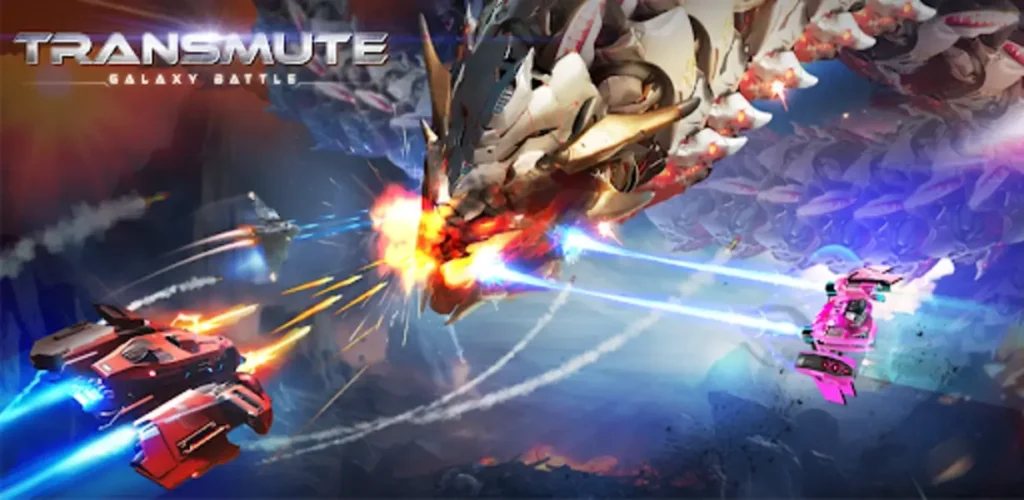
The game features a diverse roster of alien adversaries, ranging from small swarm drones to heavily armored cruisers. Each enemy type demands a different tactical approach, preventing combat from becoming repetitive. Periodic boss encounters punctuate the survival waves, offering high-stakes battles that test everything the player has learned up to that point.
Progression and Replayability
Between runs, players earn persistent currency to unlock new ship chassis, weapon blueprints, and passive perks. This meta-progression layer ensures that even a failed run contributes to long-term advancement, reducing frustration and encouraging “one more attempt” sessions.
Graphics and Visual Design
Art Style
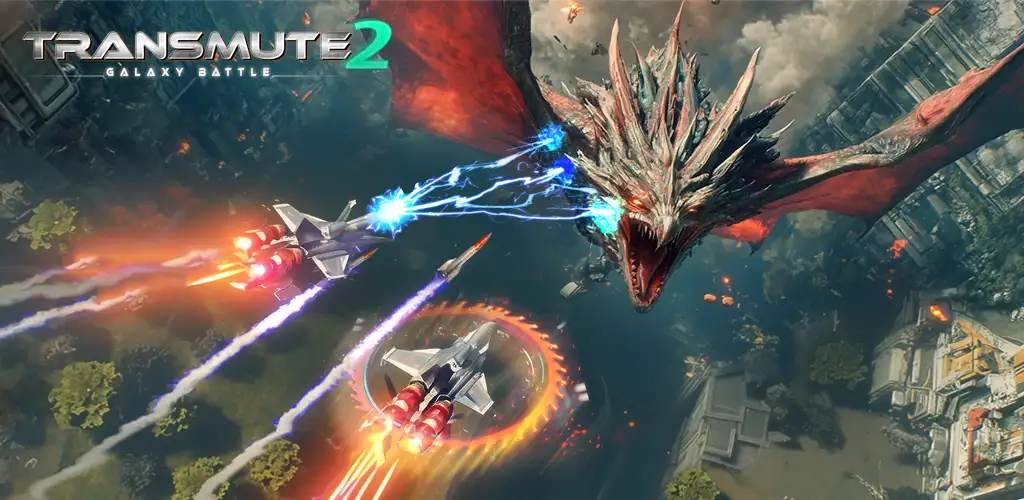
Transmute 2: Space Survivor adopts a vibrant, stylized aesthetic that balances readability with visual flair. Explosions bloom in saturated colors, enemy silhouettes are distinct and easy to identify at a glance, and the parallax starfield backgrounds add a sense of depth without overwhelming the screen.
Visual Effects and Performance
Particle effects during combat are plentiful yet well-optimized. The game maintains a smooth frame rate even during chaotic encounters with dozens of projectiles on screen. On lower-end hardware, graphical settings can be adjusted without significantly compromising the visual identity of the game.
Controls and User Interface
Control Scheme
The control layout is intuitive and responsive. Movement, aiming, firing, and activating special abilities are mapped cleanly, whether you are using a keyboard and mouse or a gamepad. The responsiveness of the ship’s handling strikes a good balance between weighty realism and arcade snappiness.
HUD and Menus
The heads-up display is uncluttered, presenting critical information—hull health, shield status, ammunition, and active buffs—without obscuring the action. Upgrade menus between waves are clearly organized, making it easy to compare options and make quick decisions under time pressure.
Sound Design and Music
The audio landscape of Transmute 2: Space Survivor complements its visual energy. Weapon fire carries a satisfying punch, explosions rumble with bass-heavy impact, and enemy hit-confirmations provide clear auditory feedback. The soundtrack leans into synth-driven, retro-futuristic compositions that build tension during quiet exploration phases and escalate during intense combat sequences. Ambient space hums and distant radio chatter add subtle world-building without becoming distracting.
Difficulty Curve and Accessibility
The game offers multiple difficulty tiers, making it accessible to newcomers while still presenting a genuine challenge to veteran players. On higher difficulties, enemy aggression increases, resources become scarcer, and boss patterns grow more complex. A gradual onboarding process in the early sectors teaches core mechanics organically, so new players are never thrown into the deep end without guidance.
Pros and Cons
Pros
- Engaging blend of survival strategy and arcade shooting
- The transmutation mechanic adds depth and creativity to loadout building
- Strong replayability through roguelike structure and meta-progression
- Vibrant art style with excellent performance optimization
- Diverse enemy roster and memorable boss fights
- Intuitive controls and clean UI
- Satisfying audio-visual feedback in combat
Cons
- The early game can feel slightly repetitive before the full arsenal unlocks
- Some weapon balance issues may require future patches
- Limited narrative content for players seeking a story-driven experience
- Occasional difficulty spikes in later sectors may frustrate casual players
Who Should Play Transmute 2: Space Survivor?
If you enjoy titles that merge space shooters with survival and roguelike progression, Transmute 2: Space Survivor is a compelling pick. Fans of games that reward quick reflexes, strategic resource management, and iterative improvement will find plenty to love here. It is equally suitable for short, pick-up-and-play sessions and longer, focused runs through increasingly dangerous sectors.
However, players who prioritize deep narrative, cinematic storytelling, or slow-paced exploration may find the gameplay loop too action-centric for their tastes.
Final Verdict
Transmute 2: Space Survivor is a polished, energetic, and highly replayable space survival shooter that improves meaningfully on its predecessor. Its signature transmutation mechanic sets it apart from genre peers, while tight controls, vibrant visuals, and a well-paced difficulty curve make it an easy recommendation for fans of the genre. Though it could benefit from a touch more narrative depth and some minor balance tuning, the overall package delivers hours of thrilling, chaotic fun among the stars.
Rating: 8.2 / 10
Conclusion
In a crowded market of indie space games, Transmute 2: Space Survivor distinguishes itself through clever mechanics, satisfying combat, and a progression system that keeps players coming back run after run. Whether you are a seasoned survivor of galactic warfare or a newcomer looking for an exciting entry point into the genre, this title offers a rewarding and adrenaline-fueled experience. Strap in, charge your cannons, and prepare to transmute your way through the void—space is hostile, but your ship is ready.
Download from Google Play for Android:
Download for Android, click here
Download from App Store for iPhone:
Download for iPhone, click here