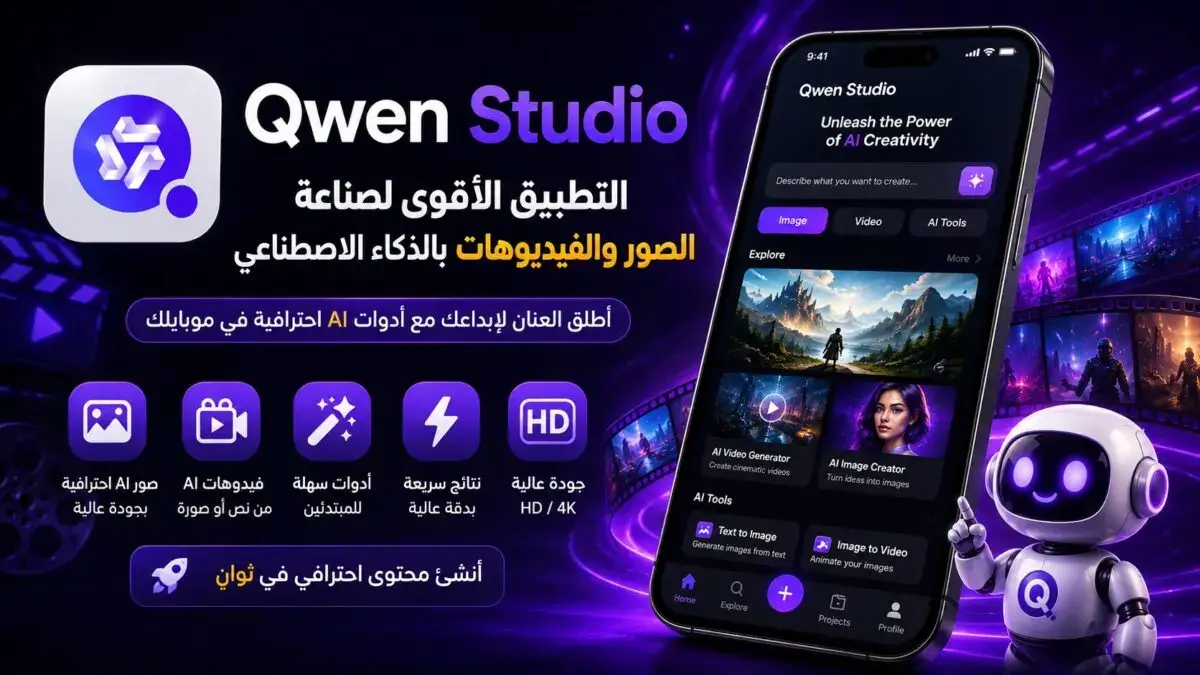
comprehensive 2026 review of Qwen Studio. Explore its features, pros, cons, and how this powerful AI development platform is transforming enterprise AI deployment.
Introduction
As we navigate through 2026, the artificial intelligence landscape has shifted from merely building large language models (LLMs) to seamlessly deploying, managing, and scaling them for real-world enterprise applications. At the forefront of this transition is Qwen Studio, the comprehensive development and deployment platform designed for the renowned Qwen (Tongyi Qianwen) AI ecosystem.
Whether you are an independent developer building the next viral AI app or an enterprise architect deploying secure, large-scale generative AI solutions, choosing the right platform is critical. In this comprehensive review, we will dive deep into Qwen Studio, exploring its core features, user experience, performance, and whether it is the right AI development environment for your needs in 2026.
What is Qwen Studio?
Qwen Studio is an end-to-end AI development platform provided by Alibaba Cloud. It serves as the central hub for accessing, fine-tuning, evaluating, and deploying the Qwen family of models. Unlike simple API gateways, Qwen Studio provides a robust Integrated Development Environment (IDE) tailored for Generative AI. It bridges the gap between raw model capabilities and practical, business-ready applications, offering tools for Retrieval-Augmented Generation (RAG), AI agent orchestration, and multi-modal data processing.
Key Features of Qwen Studio
To understand why Qwen Studio has become a top contender in the AI platform space, we must examine its feature set. Here is a breakdown of what makes this platform stand out.
Unified Multi-Modal Model Access
In 2026, text-only AI is a thing of the past. Qwen Studio provides seamless access to the entire Qwen multi-modal ecosystem. Developers can effortlessly integrate models capable of processing and generating text, high-resolution images, complex audio, and even video. The platform’s unified API means you can switch between a text-optimized Qwen model and a vision-language model without rewriting your core application logic.
Advanced RAG and AI Agent Builder
One of the most powerful aspects of Qwen Studio is its visual, no-code/low-code Agent Builder. It allows businesses to create autonomous AI agents that can browse the web, execute code, and interact with third-party APIs. Furthermore, the built-in RAG (Retrieval-Augmented Generation) pipeline is exceptionally refined. It supports advanced chunking strategies, hybrid search (vector + keyword), and re-ranking out of the box, ensuring your AI agents hallucinate less and retrieve enterprise data with pinpoint accuracy.
Seamless Fine-Tuning Pipeline
For organizations that need models tailored to their specific domain—such as legal, medical, or proprietary coding standards—Qwen Studio offers an enterprise-grade fine-tuning environment. The platform supports Parameter-Efficient Fine-Tuning (PEFT/LoRA) as well as full-model tuning. The interface simplifies dataset management, allowing users to upload, clean, and format training data visually before launching distributed training jobs with just a few clicks.
Enterprise-Grade Security and Scalability
Security is non-negotiable for enterprise AI. Qwen Studio is built on a foundation of strict data privacy and compliance. It offers Virtual Private Cloud (VPC) integration, ensuring that your proprietary data and fine-tuned models never leave your secure network perimeter. Additionally, the platform’s auto-scaling infrastructure guarantees low-latency inference, even during massive traffic spikes.
Pros and Cons of Using Qwen Studio
No platform is perfect. Here is an objective look at the advantages and limitations of Qwen Studio.
The Pros
- Exceptional Multi-Lingual Performance: The Qwen models integrated into the studio are industry leaders in cross-lingual tasks, particularly excelling in English, Asian languages, and complex translation nuances.
- Massive Context Windows: The platform supports ultra-long context windows, allowing developers to process entire codebases or massive financial reports in a single prompt.
- Cost-Effective Inference: Compared to some Western counterparts, Qwen Studio offers highly competitive pricing for both API token usage and compute resources for fine-tuning.
- Comprehensive Developer Tools: Excellent SDK support (Python, Node.js, Java) and detailed documentation make the onboarding process smooth for experienced developers.
The Cons
- Ecosystem Focus: While it supports some third-party integrations, the platform is heavily optimized for the Qwen model family. If you want to easily toggle between completely different foundational models (like Llama or Mistral) within the same visual interface, you might find the ecosystem slightly restrictive.
- Steep Learning Curve for Beginners: The sheer depth of features—especially the advanced RAG configurations and agent orchestration tools—can be overwhelming for non-technical users or absolute beginners.
Who Should Use Qwen Studio?
Qwen Studio is not just for tech giants; it is highly versatile.
- Enterprise Businesses: Companies looking to build secure, internal knowledge-base chatbots or automate complex workflows using RAG and AI agents.
- E-commerce and Retail: Brands that need multi-modal AI to analyze product images, generate marketing copy, and provide multi-lingual customer support.
- Software Development Teams: DevOps and engineering teams utilizing the platform’s coding-specific models for code generation, debugging, and automated testing.
- AI Startups: Founders who need a reliable, scalable, and cost-effective backend to build and launch consumer-facing AI applications quickly.
Pricing and Accessibility
Qwen Studio operates on a flexible, pay-as-you-go cloud model. Users are billed based on API token consumption (input and output tokens) and the compute resources utilized during fine-tuning and agent execution. For enterprises with predictable workloads, the platform offers reserved capacity plans that significantly reduce long-term operational costs. Free tiers and trial credits are typically available for developers to test the waters before committing to a production deployment.
Conclusion
As of 2026, Qwen Studio has proven itself to be a formidable, feature-rich platform that democratizes access to state-of-the-art AI capabilities. It successfully transforms the complex process of AI deployment into a streamlined, manageable workflow. Its standout features—particularly the advanced RAG pipeline, multi-modal agent builder, and enterprise-grade security—make it an invaluable tool for modern businesses.
While it may have a slight learning curve for absolute beginners and leans heavily into the Qwen ecosystem, the trade-off is a highly optimized, cost-effective, and incredibly powerful development environment. If your goal is to build secure, scalable, and intelligent AI applications in 2026, Qwen Studio is undoubtedly a platform that deserves a top spot in your tech stack.
Final Verdict: Highly Recommended for enterprises, developers, and AI innovators looking for a robust, all-in-one AI development and deployment solution.
Download from Google Play for Android:
Download for Android, click here
Download from App Store for iPhone:
Download for iPhone, click here